Friday, 15 June 2012

Lecture Twelve: Investigative Journalism

The work of the revered, faithful, true investigative journalist undoubtedly plays a pivotal role in the preservation of what journalism stands for. The determination, integrity and reliability of many writers is rather fragile, with many different version of events spread across different mediums. I feel this means there is a decline by the general public in their faithfulness in everyday news articles.

Enter the investigative journalist, who I feel somewhat reflects the role of a detective. A determined journo will stop at nothing to uncover a nation-stopping story, going to all ends of the earth to find the truth. There are issues out there that your average citizen could have never thought possible in their wildest dreams. To uncover and tell the world of these unjust and often horrific, shocking and sickening stories is in some way, an effective avenue in generating social change.

Public awareness is the key factor when setting out to uncover these elusive stories, to bring a general consciousness to the injustices of the world around them. Without these special kinds of journalists, who knows where we would be today.

Commendable investigative journalists throughout history 


From the work of Julius Chambers, who had himself committed to the Bloomingdale Insane Asylum in 1872. After ten days, he was released and wrote of the amount of perfectly sane people imprisoned at the facility, the general abuses on the patients, as well as the volumes of unnecessary lobotomies being performed on revolting patients. His writings were published in the ‘New York Times’ , which led to dozen patients being released, and members of the administration being dismissed.

Julius Chambers, 1912
____________________________________________________________


Herbert Swope, who worked as the editor for New York World 's 21-day crusade against the Ku Klux Klan in October 1921, which won the 'Pulitzer Prize for Public Service' in 1922. A fine example of investigative journalism, it was ranked 81 out the top 100 journalism stories of the 20th century by New York University's journalism sector.
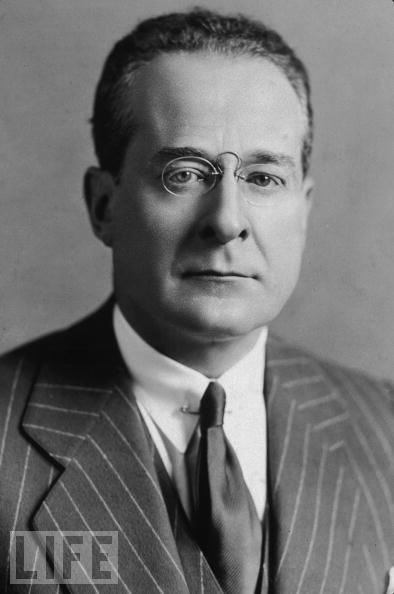
Herbert Swope in LIFE magazine
_______________________________________________________________


Seymour Hersh, who broke the story of the notorious 'My Lai Massacre' on November 12, 1969, in which hundreds of innocent Vietnamese civilians were murdered by US soldiers in March 1968.The report prompted worldwide condemnation and dramatically reduced public support for the Vietnam War. The explosive news of the massacre fuelled the outrage of the US peace movement, which demanded the withdrawal of troops from Vietnam.

Seymour Hersh still at work
________________________________________________________________


Anna Politkovskaya was a Russian reporter on the Chechnya conflict, and covered the terrible Russian treatment of the Chechen people. Her investigations and heroic efforts led to many investigative reports published in Novaya Gazeta, such as the Russian poisoning of children. Her work was widely recognized by international organizations until she was sadly murdered in 2006. She is not forgotten, as today there is a respect award in her name that  honors other women who report under circumstances of great danger.

______________________________________________________________________

The work of these journalists is astounding to me, their determination is so admirable and inspirational, with many bringing essential awareness and social change. A risky career indeed, it makes me wonder if the risk is worth the story. Then I think, where would we be without risk? Martin Luther King, Gandhi, Eddie Mabo, Oscar Schindler, Germaine Greer - some of the most inspirational revolts and saints of our time would have achieved nothing without risk, without sheer desire to uncover truth, banish injustices and achieve a fair, aware and balanced world. 


Thursday, 14 June 2012

Lecture Eleven: Agenda Setting


I never quite realised, or wanted to believe, the power media has on our society. One would like to believe that we are all free citizens, with our own mind to make our own decisions and formulate our own opinions about issues and stories circulating our globe today. I’m pretty positive, despite our personal liberties, there is a large number of people out there who believe everything they hear, read and view. Blindly sitting on their couch, watching the evening news, processing the information, formulating judgements and retaining the facts – but never stopping to ask themselves: what am I really seeing here?

There is no doubt that media spin and propaganda has been a valuable tool to infiltrate the vulnerable minds of citizens throughout history. Hitler’s Third Reich spent a large amount of time, effort and money to build a media campaign to spread fear and hatred of Jews throughout Germany, making degradation, torture and murdering of Jewish people somehow acceptable at that time.

Now, of course this is an extreme example. But it does show the power of the media in warping its clientele to perceive something a certain way, in this case, in a manipulative, dishonest and unethical way. Modern journalists, we should hope, do not set out with the aim to destroy our fellow human beings. However, there is always an agenda. It is very hard to read an article, watch a news broadcast or listen to a radio interview without picking up a particular point of view on an issue, a topic or a person. In the journalism world, this is called ‘Agenda Setting’. 

Lippman said “Propaganda is used as a tool to help shape images in the minds of human beings in support of an enterprise, idea or group”. Looking at the image here, can you  disagree with this statement? The cover on the left depicts OJ Simpson as a common criminal, his mugshot is the focus, 'trail of blood' perpetuating his 'murderous' tendencies. Contrary to this is 'TIME's cover of the same issue, idealizing Simpson in a dramatic frame of black, 'An American Tragedy' emotionally entitling the cover. Seeing these two side by side on a magazine stand must make one wonder of the impartiality of today's journalists.  


Now, not all readers are laughably gullible, I recognize that. They're not all as dumb as what I somewhat made them out to be, granted. 


I LOVE THIS QUOTE.
One could say... The media decides what is important in this country and the world. They decide what us readers should be most concerned about. The more coverage an issue or story has, the more public opinion and support there will be towards that cause. One example that comes to mind is the whole KONY phenomena. Notice how no body seemed to remotely care about the plight of child soldiers in Uganda before this aesthetically pleasing and heart-wrenching  film went viral. On one had, I supposes that shows a somewhat positive side of journalism... But i'll bet you a well-written article on starving children in Africa or the AIDS epidemic will be pushed back to page twenty-four of your daily paper, while the front cover bears a photograph of a cute gorilla, headlining "BOOBOO NEW AT THE ZOO". 

Whatever, it's all too politically corrupt and totally messed up for me to even go into that right now. All I can take away from this, is one day, I hope to bring people's attention to the real issues of the world. 

Wednesday, 13 June 2012

Lecture Nine: News Values


Waugh seems to encapsulate the confronting dilemmas budding cadet journalists need to come to terms with in their first few years. However soul crushing it may be, the articles a young journalist writing for the 'Emerald Post', or the like, are not going to be riveting, life saving or even appreciated by the readers. Your average forty-something year old, alcoholic, all Aussie macho man tradie male is not going to be clutching his heart in emotional distress when you're article about teenage alcoholism is published on page fourteen. 

Truth is, most people don't care about something that doesn't affect them personally or doesn't have much to do with current events. When the man of the house wakes up in the morning, clutching a cup of coffee in one hand and flicking through the newspaper in the other, he wants news. Simple, old-fashioned, straight up facts about what is happening in the world today. News headlines, weather, politics, tax. Interesting things to make him say WOWEE and possible a bit of a chuckle. So yes, I know you poured your heart, soul and a few tears in into your article on AIDS or racism, but trust me - i'm sure that section of the daily mail is either going to be 'saved for later' or recycled as 'old news' at the end of breakfast. 

Don't get me wrong... I am all for those types of world-changing articles and in my opinion, are news worthy and should be highlighted for the public to read. But in terms of news values, of its value to readers on a population scale, they just don't fit in to mainstream news. Not headlines, anyway. Like they say, "If it bleeds, its leads": the horrific beheading, dismembering and peculiar freezer storage of local high school girl is automatically more shocking, interesting and valuable then the fact that 600 people were killed in a bomb blast in Iraq. If it bleeds - it leads. Whatever people tell you, they crave gore, scandal and gossip. Murder, child prostitution and political backstabbing will make the front page every time. This is what is valuable to people of your local or national Australian newspaper. 

However, the Iraqi bombing will not go unnoticed, with local Middle Eastern newspapers and Al Jazeera scooping it up and making it the breaking news of the day. This is what is valuable to them - and this is the pinnacle of the whole lecture, from what I have gathered. 

News values are not a universal truth we can all agree upon. What stories are revered or tragic in one country or community will be rather blasé in another. Honestly, in my opinion, I consider this a rather positive fact of life. It means journalism is a career for writers who are interested in all topics. There is an outlet out there for every issue out there and one day, hopefully you will find a career writing about the things that are most valuable and close to your heart for people who are interested in what you have to say.

Until then, though, i'm afraid us budding journos will be forced to write about the carbon tax, the brutal murder of  local school principal, the ride of pedofiles, the amazing dog who can speak or god forbid, Lara Bingle's new (failing) reality television program. 


Tuesday, 29 May 2012

Lecture Eight: Ethical Perceptions in Media


Unless there is a potent smell of racism or violence against women displayed in media and advertisements, rarely do I get offended in this day and age. Cursing, sex, drugs, alcohol, shootings and other fragile components of films, television and books are something I can deal with, even enjoy, at times. It brings a little naughtiness, a bit of disobedience to the life of a university student who can’t afford to break the law. A little thrill, if you will.

Ethics is not something particularly innate within ourselves; rather, it is something that has been created by the way we have been brought up. Parents, religion and country of origin all play a part in our perception of what is right and what is wrong. What a young Muslim girl from Saudi Arabia things about sex, alcohol and drugs in a western film may be taken more harshly then a young American girl living in New York City. With such diverse cultures and attitudes across the country, it make is rather difficult for advertisers in Australia to know where to draw the line.


We were asked to rate different advertisements on their ethics rating in our mind, if they were acceptable to have posted in public or be played on television. Like everyone else, I held my own personal views on each piece.


I found the above two to be rather humorous, it had a smart wit about it that I do not find offensive at all. I especially like the Phuket sign, it may be silly, but it is so Australian in the way some bogans would pronounce it and the amount of tourism in Thailand, it is a good advertising sign. 


Then we have advertisements like these, that play on the heart a mind a little more. The top one I find distasteful, to me saying to all the families mourning the loss of a loved one from speeding that it occurred because they were simply STUPID. If this is the case or not, it doesn't matter. They could have had a better campaign. However, this kind of ad would certainly play on the mind of a young egomaniac male driving a lexus. The add below it also could be put into that position, making young, horny blokes rethink their choices on smoking. It is not as offensive as the top one and for me, anything to deter people from putting those cancer sticks in their mouths is acceptable for me. 


WHERE THE BLOODY HELL ARE YOU?


UGH, this ad just makes me cringe every time I watch it. Everything about it is just corny, and the bit about Aboriginals is offensive.

"WE'VE BEEN REHEARSING FOR OVER 40 000 YEARS!".

How offensive is that! As if Aboriginal Australians are all dancing warriors who are some sideshow for tourists. So bad it was even banned in the UK.

Yeah good one Australia! A tourism ad that was banned overseas. 

Friday, 25 May 2012

Assessment Four - Annotations


Part One: Reflection upon journalism related article


Paul Bradshaw and Liisa Rohumaa combine their knowledge of media modernity and journalism, to produce an informative and detailed article on contemporary media: blogging. The argument that presents itself in this article is the question of the true definition of blogging and whether it deserves the title of ‘journalism’, or if it can be disregarded as merely a public frenzy of the wannabe writer. Their conclusion is that:

‘Blogs are a platform. They can contain journalism, just as Tv, radio and print can. Many bloggers practise journalism, others do not.
However, he then makes his view quite clear when he states
‘Journalism is an invention or form of expression used to report and comment in public media on the events and ideas of the here and now. If blog fits that description, you could argue it is journalism’.

The article as a whole could be quite useful in the comprehension and different approaches modern day journalism, leaving behind the newspaper and radio broadcasts of the past. With more people being able to view, read and critique one’s blog, it is easier to get a message across. The article acts as a great guide for beginner bloggers to understand the correct way to blog to make their voice heard in the modern, technological world of journalism. 


Part Two: Three mediums, One story


Webber, D (2012) Radio news cast entitled: Aboriginal man unlikely to be charged over death of eight-year-old girl ,

This radio broadcast on the ABC radio network discusses the nature of Augustine Miller and the situation outlining his charges. Broadcaster for the ABC, David Weber, talks with the man in question, letting him reveal his thoughts, opinions and allows him to bring his own side of the story to the limelight. Unlike Guest’s online news article, this radio broadcast does not seem to be aiming to defame Mr Miller, rather allows us to perceive the situation with an open mind to the truth. It begins the story not with the taste of blood in our mouths, but rather that Miller ‘Survived a desert ordeal – which resulted in the death of an eight year old girl’. This approach suggests Augustine Miller is not particularly ‘guilty’, rather he endured a ‘desert ordeal’ as he was searching for food, when they unthinkably got stuck out there, resulting in the ‘accidental’ death of the girl. This angle implants a seed into the minds of the viewer, which is this situation could have happened to anyone, cars break down, accidents happen. Furthermore, Mr Miller plays a large part in the interview, explaining his prior convictions, which surprising has the ability to completely resurrect the ‘Sick, crazed paedophile’ label the media has stuck upon him. In this sense, one can regard this broadcast as highly valuable, as it allows people to confront their prior negative spin on Miller with a clean slate. This is a vital party of modern journalism, to allow a 360 degree scope on a story, revealing further, unknown truths and allowing every actor surrounding the incident to fairly address the issue to the public in their own way.


Guest, D (2012) Online news article entitled: Girl dies after paedophile ordeal in WA desert
Article found on: http://www.theaustralian.com.au/news/nation/girl-pedophile-found-in-desert/story-e6frg6nf-1226235963016

Debbie guest, journalist for national newspaper, ‘The Australian’ reports on the story in an online version of a news article. The article takes a complete opposite side of the situation, with obvious bias projecting negative attitudes towards Mr Miller based on previous convictions.  Not only does it describe it as a ‘Paedophile ordeal’, but states that she “has died after spending four days alone with a convicted child sex offender”. This clearly is intended to incite into the minds of the readers that yes, he is a paedophile and that her death was the direct result of his actions. It must be said, that without reading further along in the article, one could be forgiven to jump to the conclusion that he abused and murdered the girl ‘because that is what paedophiles do’.  This is a shameful action in the journalism world – it purposely darkens any other light on the story, rendering the article unfair, imbalanced and some could say, propagandistic in nature in regards to generating stereotypes about aboriginal men living in remote communities. This is a poor article, and anyone with a journalistic mind needs to approach it with great caution, opting to research the situation further. However, the fact that this was in the highly-regarded newspaper, ‘The Australian’, leaves little room for readers to see the holes and mind-altering twists encompassing the article.

Sheraton, E (2012) Yahoo GWN News Video: Eight year old dead. Mother left shattered. http://au.gwn7.yahoo.com/w3/news/a/-/local/12498800/an-eight-year-old-girl-dead-her-mother-left-shattered-video/

Miss Emma Sheraton is a young reporter for Yahoo’s ‘GWN’ news, a station that strives to cover stories in Australia’s smaller country towns. From the beginning, the video plays on the viewer’s heartstrings, with the girl’s mother crying to the camera, with Sheraton sympathising “A mother grieves the loss of her eight year old daughter”.  It is obvious this video is intended to ignite the emotional side of the story – that is first and foremost above the news and details about the accused, unlike in the other two media outlets by Guest and Webber. Admittedly, this is a very effective way to cover such a heartbreaking story – the ‘mother loses child’ mentality has the ability to go further than the small Aboriginal community. It is a timeless tale, playing on the innate maternal instincts of all mothers watching the video, sympathising with the woman crying in the first scene. Despite the obvious emotive spin intertwined in the story, it is not overly judgemental on Mr Miller, other than stating he was a ‘convicted paedophile’ along with the local women pleading he return to face tribal punishment. This is not blatantly trying to conjure up images of a sick pedofile, as we can see in ‘The Australian’s online news article, rather it is reinforcing that he is to blame, whether intentionally or not. One can also praise the fact that traditional Aboriginal customs were kept sacred, not showing the face or expelling the name of the deceased.  Essentially, Sheraton’s yahoo news story is rather valuable piece of journalism, but it could be criticized for being too one-sided in its approach, leaving little room for consideration of Augustine Miller. 

Thursday, 19 April 2012

Negative affects of the media in multicultural societies


Continuing on from my last post, I would just like to re-enforce with some examples the negative affect media can have upon people, nations and the globe.

Two Case Studies

_______________________________

The Holocaust


Aryan children were fed propaganda in the form of a 'harmless' children's book, entitled 'The  Poisonous Mushroom', in which Jews were depicted as the mushrooms that could poison the children, and therefore - stay away. 

When we look back into the history books, no doubt we all find the German Nazi annihilation of the Jewish population of Europe during World War Two an utterly disgraceful and horrific stain on humanity.

What will also be present in the pages of those books are the various original posters, films and articles that we now know as ‘Propaganda’.  However, if we take ourselves back in time and imagine ourselves as a common, Aryan German young adult being bombarded with nothing but these media productions, what kind of affect would that have on the mind? How could all of these journalists and directors be lying to the German nation? 

While having full trust in the media, it is not surprising that such racist and derogatory mentalities were developed at that time in correspondence with Adolph Hitler’s crazed ideologies. 

It is undeniable that the media played a vital part in brainwashing the nation to believe these ludicrous claims and blindly follow the Nazis in their ‘final solution’ and the murder of over twelve million people. 


Artist portrait of the perfect Aryan family

Found in a German newspaper: on the left depicts a healthy, young German male who is working hard in the sun, while 'the
enemy' the Jew is making all the money. Notice also how is seen as fat and ugly compared to the German man.


Rwandan Genocide

The 1994 genocide in Rwanda is a common example of the role of media on conflict zones. The genocide is considered one of the most horrific catastrophes of the 20th century, and the media played a significant role both internally and internationally. Prior to the genocide, radio stations and newspapers were utilized by the perpetuators to dehumanise the impending victims, Rwanda's Tutsi minority.

"During the genocide, radio was used by the Hutu extremist conspirators to mobilise the Hutu majority, to coordinate the killings and to ensure that the plans for extermination were faithfully executed. While a series of terrible massacres of Tutsi were carried out and as the signs of ever-increasing violence grew, Rwanda was totally ignored by the international media. When the genocide came, the erratic media coverage largely conveyed the false notion of two 'tribes' of African 'savages' mindlessly slaughtering each other as they had done from time immemorial. As a result, there was little public pressure in the West for governments to intervene."                                     [Thompson, A, 2007, 'The role of Media in the Rwandan genocide', abstract]


What we must remember here, is that in both cases, the people of the nations did not consider these derogatory pieces of media as 'Propaganda'. To them, it was everyday news for the public to be exposed to.  Is this a suggestion that media itself  characterised the nature of the war and genocide in both cases? I'll leave that for you to decide. 
____________________________________


Other examples may include the media coverage of the Sydney Gang rapes committed by four Australian-Lebanese men. Shortly after this occurred, there was hate-filled riot demonstration, dubbed 'The Cronulla Riots'. 

It could be suggested that this case, whether the media's fault or not, focused on the fact that these men were Muslim, and therefore I feel that this emphasis on the religion of the offenders played a vital role in the riots, and created, or perpetuated, an overall hatred, racist and fear of Muslim-Australians.

CRONULLA RIOTS: White Australians violently beating down on an innocent Muslim man.
___________________________________________________________________________________


I believe it is safe to say that media has a strong impact on the minds of the readers. In such a multi-cultural country such as Australia it is important, as a journalist, to stay impartial and strive towards a racially-neutral article that does not suggest any favouritism or degrading of a particular race. This is vital if we are to to close the gap between races, culture and religion in order to live in an embracing multi-cultural, peaceful nation and make us all, regardless of background and beliefs, proud to be Australian. 

Disgrace in the Media.

Something that I found rather interesting today in my journalism tutorial, was the way two different contrasting news outlets reported on a particular incident. 

Basically, the real facts were that Augustine Miller, 38, allegedly had sex with a fourteen year old girl, with the judge deeming it was, in fact, ‘consensual’.  In early 2009, he took a drive with the deceased girl out into the desert in search for kangaroos. They ended up getting lost in the desert, both becoming lethally dehydrated. The girl died a few days after they were found.

These are two headlines posted by two different news companies:

From the ABC:

From 'The Australian':

I find this absolutely insane.

One the one hand, we have our public media ABC journalists who seem to be sympathising with Mr Miller, and staying quite true to the facts. On the other, is Debbie Guest from the Australian claiming girl dies after 'paedophile' ordeal.  He was never even 'convicted' of child sex acts!

The latter is obviously taking the scandalous, gossip-worthy avenue rather than the truthful, fair side of the story. 'The Australian's' agenda is obvious: they are warping the facts, as well as drawing on past, unrelated issues in the man's life in order to create the assumption in readers minds that Ausustine Miller is a murderous paedophile. 

Another issue associate with this case, was the utter lack of respect for Indigenous culture. It is well known that for Aboriginal peoples, it is considered pivotal that one does not see or hear the photographs  or voices of a person who has passed away. However, various newspapers blatantly plastered this little girl's photo all over the front pages, much to the disgrace of her relatives.

This is where it is easy to lose respect for different media outlets. How does one know which story to trust? My suggestion is to read different articles on the same story to gain a wider perspective. 

The saddest thing I feel in relation to the media and the public, is that people are far much more likely  to read and become interested in second article - a story that has scandal, and is published in well known,  plentiful and cheap newspapers.  


Lastly, I want to emphasise the devastating consequences false, attention-seeking articles such as the latter can have long after it is published. Besides Mr Miller being labelled a child rapist and killer, this kind of story only perpeuates, or ignites, hatred and fear towards our Indigenous culture. For me, this is one of the most disgraceful things that can be done in the Australian media.